Before starting a crochet blanket, compare the color identifier and dye-lot number on every ball, then count how much you have in each batch. Matching color names alone do not establish a matching dye lot. A quick inventory gives you a chance to choose where any visible difference belongs before it appears halfway across the blanket.
Read two different identifiers
The color name or number identifies the shade; the dye lot identifies the production batch. Lion Brand’s dye-lot explanation notes that different batches of the same named color can look different. Label layouts vary, so look for wording such as “lot” or “dye lot” rather than assuming every printed number is a color code.
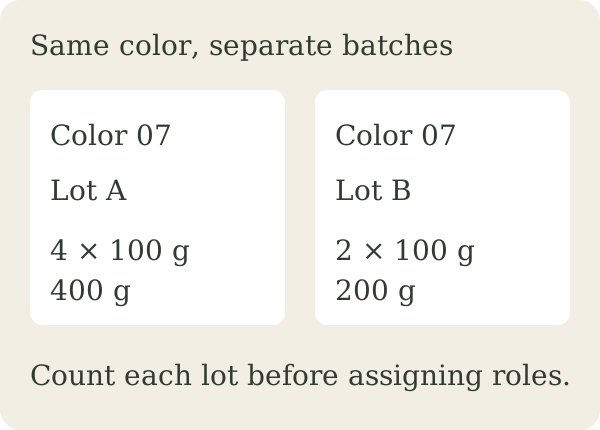
Keep the labels or photograph them beside your project notes. For partial balls, note the net yarn weight as well as the lot. If a label is missing, mark the lot unknown; appearance cannot recover a missing batch number.
Compare the yarn before choosing its place
Lay the balls together in good light and make a sample with a transition between the supplies you intend to use. Decide whether the change is acceptable for your design. A sample is more useful than trying to judge a future join from a tiny online color image.
For a quiet, single-color body, group matching lots first. For a blanket with planned bands or motifs, consider whether separate batches could have separate roles. These are design options, not promises that a mismatch will disappear. If packaging says “no dye lot,” still compare the actual supplies before committing; Lion Brand notes that no-dye-lot yarn can still vary in color.
Count the matching group, not just the total
Suppose you own six full 100 g balls of the same yarn and color: four from lot A and two from lot B. The total is 600 g, but the matching-lot groups are 400 g and 200 g. If your body estimate including its chosen allowance is 450 g, lot A alone is 50 g short.
This is an original inventory example, not a measured blanket requirement. It shows why “I have 600 g” can hide a design decision. Use your own body estimate and include the finishing plan before deciding whether you have enough.
Give different batches intentional roles
- Keep one batch for the body. Explore a smaller size that fits its measured budget, or locate enough of that lot before beginning. Availability is not guaranteed.
- Plan a contrasting section. A deliberate band of another color can separate sections using different lots. Budget every section and compare a sample first.
- Reserve a batch for edging. Check that its quantity covers the chosen border and that you like its appearance beside the body.
Do not assign the 200 g group to a border solely because it is the smaller group: the border needs its own estimate. Likewise, alternating batches is not a guarantee of an invisible result. Trial the actual arrangement before spreading it across the whole blanket.
Leave a clear record for the next session
Keep each batch together and write down its intended section, available amount and reserve. For a striped design, add those entries to your color-by-color plan. Keep remaining balls identifiable while you work so the next yarn change follows the plan.
The calculator below can estimate length in partial balls using the original label weight and length. Run it separately for each supply; it cannot identify a dye lot or judge whether two colors match. Those decisions come from the labels, your sample and the appearance you want.
Use the calculator ↗Examples illustrate the arithmetic; they are not physical project tests. Send a correction.